Saturday, October 5, 2024

The Skolt Village of Neiden, Norway

One focus of my recent travels in Eastern Finnmark this past August was to learn more about the Skolt Sámi or Eastern Sámi. I'd contacted the staff of the Ä’vv Skolt Sámi Museum in Neiden, Norway, and was encouraged to visit them. One of the staff, Christina Mathisen, who has Skolt heritage, was kind enough to offer to drive me to Neiden from Kirkenes, since she lived in the area.

We passed the airport on the E6 and then headed west and south along the Neiden and Munkefjord, a relatively shallow bay that is now a nature reserve and important home for birdlife. As we drove, I saw the landscape around Kirkenes and the fjord gradually and then quickly change from mostly treeless hills and shorelines to lakes and rivers edged by scrub birch, and to farmland.

The Neiden River

By the time we came to the old Skoltbyen, a preserved village of a few buildings, the landscape resembled northern Finland—unsurprisingly, for the border divides the old Skolt territories. Before 1826, this was a common area, used for grazing reindeer and salmon fishing; after Russia and Norway signed a treaty affirming the state borders, the large siida of Neiden (Njauddâm in the Skolt Sámi language) was split in two and remains so: one side is in Norway and the other is in Finland, which was, until 1920, a Russian duchy. The Finnish town is called Näätämö.

For many centuries there were seven siidas (or sijjdds) in the extensive Skolt territories. Border closures, war, and forced evacuations have left their mark. Many Skolt left the Soviet Union after the Second World War, and now the largest population of Skolt-speaking Sámi live in Northern Finland. Of the c. 1,000 people who still identify as Skolt (sometimes called Eastern Sámi), about 600 live in Finland, 250 in Russia, and just 150 in Norway, where the modern museum, Ä’vv,  was built in 2017. The largest number of Skolt speakers is in Finland. In Norway, the Skolt language largely disappeared around 1900 Among the Nordic Sámi population, estimated at from 80,000 to 100,000, depending on the criteria used, the Skolt have long been a minority and a neglected one. That is changing, at least in Finland and Norway, where younger people have begun to reclaim their identity, and more concrete measures are underway to revitalize the language and make Skolt history and identity visible again.

What is called the Skoltbyen is not a really a village now, but a protected area managed by the museum.   One small building goes back to 1565, though it has been rebuilt several times and its altarpiece and icons are older than the structure. This is the chapel of St. Georg, reputedly built by Saint Trifon, a Russian Orthodox monk who also founded the church at Boris Gleb on the Pasvik River.

St. Georg Chapel, Neiden

Another building from the 1870s still exists, a one- room house that once belonged to Ondre Jakovits and his wife and children. Like the homes of several Skolt families who stayed on in the area, Ondre House is built of split logs; photographs from the early 1900s show few trees in the area, where now there are woods of scrub birch along the strongly flowing Nieden River. Ondre Jakovits is remembered today as a storyteller; in 1918 Isak Saba traveled to Neiden from Vardø in North Varanger to write down several dozen folktales and legends from Jakovits and to translate them into Norwegian. These tales of noaidis, Chudes, and the small folk called Chakkalakkas were included in the first volume of bilingual Sámi folktales and legends published in 1927 by J.K. Qvigstad.

That summer’s day in early August the sound of the river and the sough of the birches cast a mood of enchantment over the Skolt village, but as with so many places in the north of Norway, there's a darker history. Beginning in the late 1300s through the early 1600s, the Skolt buried their dead in a churchyard in the village. In 1915 Johan Brun from the Anatomical Institute at the University of Oslo was responsible for excavating and then removing approximately 94 skeletons from the Neiden churchyard in order to preserve them as part of a much larger project connected with the racial biology studies popular in Norway and Sweden at the time. Although in 1915, the Skolt allowed the excavation, a hundred years later, the Orthodox congregation of Neiden requested the remains back. The remains were returned and reburied in 2011. There’s now an Orthodox memorial on the mound.

The reburial ceremony in Neiden, September 2011 (reburial place, lower right).
Photo: © Tonje P. Solem 2011


Friday, September 27, 2024

August Travels in East Finnmark, Norway


Thanks to a travel grant from the American-Scandinavian Foundation in New York, I had the good fortune to spend most of August in Northern Norway, specifically in Eastern Finnmark. I flew into Kirkenes, on the border to Russia, and then made my way slowly, by bus and car, around the Varanger Fjord. From Vadsø I took the Hurtigruten to Tromsø for a last week of visiting friends and doing research in the Tromsø Museum library. 

Hurtigruten arriving in Vadsø
Most of this travel was in service to a project I’ve been working on for the past two years, a translation from the Norwegian of a significant collection of Sámi folktales. These appeared a bilingual (North Sámi and Norwegian) series of four volumes, Lappiske eventyr og sagn [Lappish Folktales and Legends] in 1927-1929 under the name of J.K. Qvigstad, a Lappologist and college rector in Tromsø. In 1997, the thousand or so folktales in Lappish Folktales and Legends were condensed into a hefty book of around three hundred stories in Norwegian, Samiske beretninger [Sámi Narratives], edited by Brita Pollan, a Norwegian scholar of religion. My version has echoed many of her choices though I’ve added and subtracted some tales (it will be published by the University of Minnesota Press in a year or so). 

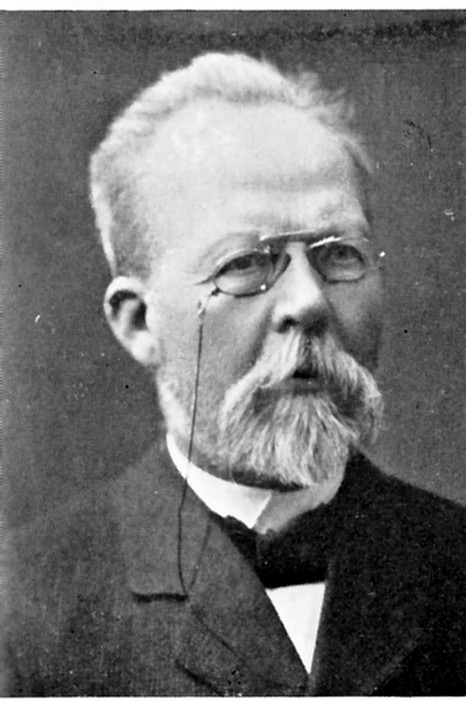
J.K. Qvigstad

Dozens of Sámi storytellers contributed to the volumes. Most of their tales were told in Sámi dialects to Qvigstad, from the 1880s through the 1920s; he then transcribed them into a standardized North Sámi and translated them to Norwegian. The stories came from different regions of Sápmi, particularly the Lyngen Peninsula, the Varanger Fjord, and Karasjok and Kautokeino. But the work of another collector, Isak Saba, was also important to the first volume of Lappish Folktales and Legends.

Saba, born on the Varanger Fjord and a former student of Qvigstad’s in Tromsø, played an important part in Sámi politics in the early twentieth century, as the first Sámi person ever elected to the Norwegian parliament. He later resumed teaching back in North-Varanger, but also decided to become a folklorist. With support from the Norwegian Folklore Archives in Oslo, Saba collected folktales from the Varanger Fjord area and from lands to the southeast, still inhabited by the Skolt Sámi in Neiden and Boris Gleb. Sadly, Saba died in 1921, just forty-five. Over a hundred folktales collected by Saba made their way into Qvigstad’s hands and into Lappish Folktales and Legends.


Isak Saba
Over the course of working on the translation of the folktales and writing a draft of the introduction, I became more aware of the extent of Isak Saba’s contributions, and I also grew determined to make them more visible. So my trip this summer was in part to educate myself more thoroughly about Isak Saba’s work as a folklorist, as well to get a sense of the landscape of these stories. I have long been curious to visit a few of the museums in East Finnmark, and particularly Ä´vv Saa´mi Mu´zei, the Skolt Sámi Museum located in the border area of Norway, in Neiden. The Skolt Sámi are far less written about than other groups of Sámi, and there’s not much about their history in English. But having translated a number of Skolt tales transcribed by Isak Saba, I was eager to see something of the Skolt landscape, however truncated by state borders and time.


Friday, June 28, 2024

Two new podcast interviews about From Lapland to Sápmi: Collecting and Returning Sámi Craft and Culture


I had a great time at the KPTZ radio station at Fort Worden in Port Townsend WA, talking with Cris Wilson, the host of Booklovers' Cafe. The interview aired June 18 and is available in their archive for streaming.

I was also interviewed recently for an episode of the podcast Crossing North, produced by Colin Gioia Connors for the Scandinavian Studies Department and Baltic Studies Program at the University of Washington in Seattle. In the episode ("Repatriation is in the Air"), Amy Swanson King, a graduate student at the UW and member of the Pacific Sámi Searvi, and I talk about From Lapland to Sápmi, published a little more than a year ago by the University of Minnesota Press.

Crossing North has all kinds of fascinating interviews with scholars, artists, and community members about Nordic and Baltic topics, including the "Nordic Languages of Middle Earth" and "Werewolves on Campus." Check it out!


Saturday, April 27, 2024


I just watched the new Netflix film, Stolen, based on the book by Ann-Helén Laestadius (translated from Swedish by Rachel Willson-Broyles), and I thought the writers and director did a fine job of creating a beautiful and distinctive landscape and powerful storyline about discrimination, hate crimes, and justice. The film is mostly in North Sámi and some Swedish with subtitles, and the main roles are played by Sámi actors.

I'd quite liked the novel, although I'd found the second half a bit drawn-out. I didn't mind that too much, because I cared about the character of Elsa and her friends and family members. I did miss the exploration of Elsa's friendship with two girls, and the more detailed story of her uncle Lasse. But I have to say that the film was excellent at ratcheting up the dramatic tension and still keying into the many losses and obstacles faced by Elsa and her community.

It was exciting to see the cast and crew list at the end--so many Sámi names. I've heard that it's one of the most popular films on Netflix at the moment--well-deserved!


Saturday, March 30, 2024

Forcible displacement of the Sámi in Norway and Sweden


Photo of Sámi herders in the 1920s

  In April the University of Minnesota Press will release  the powerful book The Rocks Will Echo Our Sorrow, by Elin Anna Labba, and translated by Fiona Graham from Swedish. 

An essay by Labba is available now online in the journal Places.


More than a hundred years have passed since the Sámi were forcibly displaced from their homes in northern Norway and Sweden, a hundred years since Elin Anna Labba’s ancestors and relations drove their reindeer over the strait to the mainland for the last time. The place where they lived has remained empty ever since. We carry our homes in our hearts, Labba shares, citing the Sámi poet Áillohaš. How do you bear that weight if you were forced to leave? In a remarkable blend of historical reportage, memoir, and lyrical reimagining, Labba travels to the lost homeland of her ancestors to tell of the forced removal of the Sámi in the early twentieth century and to reclaim a place in history, and in today’s world, for these Indigenous people of northern Scandinavia. 

 Advance Praise:

"To think that someone can write so poetically and beautifully about something that hurts so much . . . It is a staggering read, and we cry. Thanks to Elin Anna Labba, no one can turn a blind eye to the abuses committed by the Swedish state against the Sámi people. The suffering remains with many, but the truth has finally been told."—Ann-Helén Laestadius, best-selling author of Stolen


"The Rocks Will Echo Our Sorrow speaks through the forced displacement of the Sámi from their beloved homeland to make a gathering place of stories, images, joiks, and letters, singing the contours of Sámi resistance through time, through the forest, and through Indigenous sorrow."—Leanne Betasamosake Simpson, author of Noopiming: The Cure for White Ladies


"The Rocks Will Echo Our Sorrow, a book about the Sámi refusal to be wholly dispossessed, is a beautiful addition to the global Indigenous literary tradition. Elin Anna Labba tends to the poetry of everyday thought and reminiscence and, in so doing, offers up an idiom of land that is endlessly moving. A work of collective testimony, a remapping of Swedish history, an archive in and of itself, and, by its end, a vital rallying call."—Billy-Ray Belcourt, author of A Minor Chorus


"Throughout the 1920s and 1930s, several hundred members of Sámi reindeer-herding families were uprooted from their homelands in northern Sápmi and forced by the Norwegian and Swedish governments to relocate farther south in Sweden. A descendant of one of the families, Elin Anna Labba tells this wrenching, forgotten history with tender attention, using interviews, photos, and documents. A crucial contribution to Indigenous and Sámi history, The Rocks Will Echo Our Sorrow is heartbreaking, infuriating, and necessary reading."—Barbara Sjoholm, author of From Lapland to Sápmi: Collecting and Returning Sámi Craft and Culture


Places:

Sunday, March 3, 2024

Sápmi in German Museums, New Beginnings


In my recent book, From Lapland to Sápmi, I touched on Sámi objects that ended up in German museums, largely in the 19th and 20th centuries. Some were collected by tourists and amateur ethnographers; others were bought in bulk by men who purchased them on behalf of ethnographic museums. In the closing chapters of the book, I mentioned that most German institutions, like the vast Museum Europäischer Kulturen (MEK) in Berlin, did not have a good grasp on the provenance and history of their hundreds of Sámi objects and displayed very few.

Objects from the Sámi Collection at MEK

 I described the situation as it was in 2022, when I finished the manuscript. How much has changed in just two years! In fact, things have been in movement for several years now, but they have become much more visible since late 2021, when the Norwegian Parliament allocated a significant sum to a five-year project supervised by Cathrine Baglo that would “provide an overview of Sami collections in German museums, link collection history and object-specific knowledge, and lead to increased expertise in both German cultural heritage institutions and Sami museums.” [Nov, 2021, Norwegian Museums Association newsletter].  

 The MEK in Berlin has one of the largest collections of Sámi material in Europe (1000 objects and around 700 photographs). Aside from a few objects from the 1600s, most of the collection was gathered from 1880 and 1929 on behalf of the Museum für Völkerkunde (today the Ethnologisches Museum), not as part of European culture, but as examples of exotic international culture. The MEK now claims this material as part of its recently designated (and now searchable online) “Sámi Collection” and has shown itself eager to work with Sámi museums in the Nordic countries, specifically Ajtte in Jokkmokk, Sweden, and Siida, in Inari, Finland. The two-year project, which began in 2023, is called "The Sámi Collection at the Museum of European Cultures. A multi-perspective approach to provenance research.”

In an interview on MEK’s blog [in German, translated here from DeepL], Eeva-Kristiina Nylander, who works with both Siida in Inari and MEK, explained that “My task is to look through the entire collection and identify specific pieces that we want to take a closer look at in terms of their provenance. After that, my main task will be to coordinate the collaboration between the museum and local artisans and artists who want to study the collection and bring their knowledge and additional contexts to the project.

 “At the moment I'm doing a lot of archive research to prepare. Later on, we want to invite people to the MEK who have a special relationship with objects like these and give them the opportunity to look at the collection and choose the objects they specifically want to research. We want to do five different case studies, which can range from essays to art projects to reconstructions of objects. We want to give participants the opportunity to engage with the collection in any way they choose, to be inspired and to learn more about materials, forms and the practices associated with the objects.”

 Elsewhere in Germany, the Hamburg Art Museum held an exhibition last year, “Speaking Back: Decolonizing Nordic Narratives” with the intention that “Sámi and non-Sámi artists will critically review the Nordic colonial heritage and its linkages to German museums and colonial history in general. Even more, the exhibition gives space for a critical and responsible debate on decolonial agency and strategies of resistance.”

 Marja Helander, photo

This exhibition was followed, beginning last September and continuing through March, 2024 by a second exhibition, “The Land Has a Mind to Speak,” at Museum am Rothenbaum – Kulturen und Künste der Welt (MARKK). The museum holds a large collections of Sámi artefacts in Germany and was formerly the Ethnographic Museum in Hamburg. It features the artworks of Sissel M. Bergh, Annika Dahlsten & Markku Laakso, Marja Helander, Erica Huuva, Solveig Labba, Britta Marakatt-Labba, Outi Pieski, Katarina Pirak Sikku and Anniina Turunen, in dialogue with historical objects in the museum.


I knew—and hoped—when I wrote my book, From Lapland to Sápmi, that the material about repatriation, from Nordic and European museums, might well become outdated even before the book was published or soon after. The momentum is building, I’m happy to see, in Germany in particular, in the financed projects described above, and in exhibitions and workshops where Sámi duojárs (artisans) connect with museum objects in foreign museums. The objects may or may not be returned to Sápmi anytime soon, but connections are being made and all things are possible.

Saturday, December 9, 2023

Anna-Stina Svakko and the Arctic Indigenous Design Project (AIDA)


Anna-Stina Svakko, Sámi Duojár
Anna-Stina Svakko's work has always impressed me for its beauty and preciseness. Born near Kiruna, she has been studying and making duodji and art since the 1980s and is considered one of the foremost artisans or duojárs of "soft handicraft" today. She primarily works with fabric, wool, leather, fishskin, fur, and sometimes Plexiglas to create traditional and  contemporary clothing.
 
Her creativity also manifests itself in poetry and art. Her studio website, Astu Design, showcases her range and also includes a shop where you can browse through work for sale. 
 
Svakko has participated in multiple exhibits and is also a teacher and lecturer on the subject of duodji. In the past few years she became one of the many important duojárs in the Nordic countries to participate in the Arctic Indigenous Design Project (AIDA), a cross-border collaboration in Sápmi between the Sámi Archives of the National Archives of Finland, the Ájtte Swedish Mountain and Sami Museum in Sweden, and Sámi allaskuvla in Kautokeino, Norway. 
 
AIDA "aims to establish archives for Sámi duojár and artists and to ensure the preservation and continuity of Sámi design-thinking for future generations."
 
In the digital lead-up to the Arctic Arts Summit that took place in Whitehorse, Yukon Territory in 2022, three women involved in AIDA and duodji participated in a filmed conversation about the AIDA archives. They include Gunvor Guttorm (professor in duodji at Sámi allaskuvla), Inker-Anni Linkola-Aikio (senior research officer at the Sámi Archives) and Anna Westman Kuhmunen (curator at Ájtte museum).