Showing posts with label historical fiction. Show all posts

Tuesday, January 7, 2025

The Reindeer of Chinese Gardens, my new historical novel


Sjoholm is a gifted storyteller, eloquent on the subject of Sámi prejudice and the poignant dilemma for all immigrants: Make a life for yourself in this new world, or surrender to the emotional pull of the old country? And while Dagny has her own demons, she ends up being not just a survivor, but a humane model for all of us. An engrossing novel that features a memorably strong, vibrant female character.

Kirkus Reviews


Through the journals of Dagny Bergland, Barbara Sjoholm has given voice to the challenges of immigration from a variety of viewpoints – Norwegian, Chinese, Sami. Their stories are complex, touching, sometimes tragic. It is above all, a story of America and what it means to be assimilated into American culture and geography.

Marlene Wisuri, Chair, Sami Cultural Center of North America


I’m thrilled to announce that my new historical novel, The Reindeer of Chinese Gardens, is now available in print and ebook editions. I had the idea for a novel set in Port Townsend, where I live, many years ago, but it took a long time to come to fruition. It involved a lot of research into not only this city’s boom-and-bust history in the late 1800s, but also research on the “Reindeer Rescue” expedition that brought Sámi from Lapland to Seattle, Port Townsend, and Alaska in 1898, in an ill-fated attempt to supply the Yukon Gold Rush miners with food by reindeer. I also explored Port Townsend’s Chinese district, Norwegian-American newspapers, seafaring in the waning Age of Sail, Seattle’s history, especially the Ballard neighborhood—and much more. No wonder that with all this research, in addition to a number of other books and translations I published over the last decade, that The Reindeer of Chinese Gardens took me over twelve years to complete. 

Norwegian-born Dagny Bergland and her husband arrive in turn-of-the-century Port Townsend, Washington after years of sailing their merchant ship around the globe. They’re just in time for the Yukon Gold Rush and the arrival of a group of Sámi reindeer herders from Lapland on their way to Alaska to supply the ill-prepared miners. Dagny’s journals, beginning in 1897, tell a fresh and riveting history of the Pacific Northwest and its immigrants. A novel of friendship, love, loss, and motherhood, The Reindeer of Chinese Gardens is the story of a remarkable woman who learns to steer a new course in a new country. 

 Although the official publication day is February 1, you can find it on sale now at Amazon, in print and as an ebook, or from other vendors via Draft2Digital, such as Apple, Kobo, Smashwords, and Barnes & Noble. It is also available or can be ordered from brick-and-mortar independent bookstores or online from bookshop.org.

I’ll be giving a reading at the Port Townsend Library Thursday evening at 6pm on February 20. I’ll also be in conversation with Amy Swanson King of the Pacific Sámi Searvi at the Nordic Museum in Seattle on Thursday, March 20. Amy and I previously had a great talk for Crossing North about my previous book, From Lapland to Sapmi.

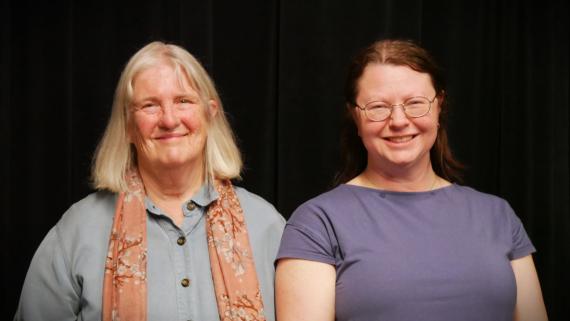
Barbara Sjoholm and Amy Swanson King pose in front of a black curtain in a studio.
Barbara Sjoholm and Amy Swanson King, Seattle, Nov 2023


Thursday, July 27, 2023

Three New Books From Sápmi


Today I want to highlight several books about Sápmi published in the last couple of years: a novel, an autobiographical graphic novel, and a book of writing published in connection with the 2022 Sámi Pavilion at the Biennale in Venice.


The End of Drum-Time by American author, Hanna Pylväinen, is a historical novel set in Sweden in the mid-1800s, at a time when the new pietistic Lutheran movement called Laestadianism was taking root in northern Scandinavia, particularly among the Sámi and Kven people. Named after the Swedish-Sámi pastor Lars Levi Laestadius—dubbed “Mad Lasse” in the novel—the novel follows the paths of several characters: two of the pastor’s daughters, and several reindeer herding families. One of the great pleasures of the novel is Pylväinen’s deep knowledge of the weather and terrain of the Torne Valley and the small church village where most of the action takes place. Pylväinen has apparently visited Northern Sweden and Norway often and embedded herself with a reindeer-herding family. Her research shows in detailed descriptions of the herds and tent life.

The writing is rich, though the sentences are often long, and parts of the story move a little slowly. The novel has been billed as a love story, but the awkward erotic relationship between Willa, Lars Levi’s odd daughter, and Ivvár, a troubled young herder whose father has converted to the new faith, was not the most compelling aspect of the story for me. I savored instead the scenery and historical aspects of the book. Pylväinen herself grew up in a Laestadian sect in the United States, and she captures the strangeness of a world steeped in sin and redemption, but also in the wide-open spaces and community life of the Sámi siidas before industrialization and assimilation.


I picked up the autobiographical graphic novel, Da vi var samer (When We Were Sámi) by Mats Jonsson in Oslo this past February. It was translated in 2023 from Swedish into Norwegian. Sadly, it’s not too likely to find its way into English, though one of Jonsson’s autobiographical graphic novels, Hey Princess, was translated ten years ago. That book was described as taking its place “in the proud tradition of self-deprecating, confessional, sex-obsessed and guilt-ridden autobiographical comics, but stakes out a unique identity by virtue of its Nordic setting and biting social criticism.”

https://swedishbookreview.org

 “When We Were Sámi” is also full of self-deprecating humor, satire, and insight, but its subject matter is more somber and searching. Jonsson tells the story of learning after his grandfather’s death that the family comes from Måla, Sweden, and that until early in the twentieth century they considered themselves Forest Sámi. The discovery of papers and photographs in a hidden chest leads Jonsson on a quest to find out more about his family’s history. In doing so, he also goes back in time to illustrate Swedish history and the deliberate erasure of the Forest Sámi’s existence. Unlike the reindeer-herding Sámi who were allowed to keep their reindeer, while subject to ever-greater state control, the Forest Sámi were continually pushed out of their territories to make room for settlers, loggers, and farmers from Finland and Southern Sweden. Eventually Jonsson’s family gave up, assimilated, and did not talk about their past.

This is a part of Swedish history that even Swedes don’t know, much less those of us from other countries, and it’s presented in a vigorous black and white images and lively monologs and dialogs with family and friends. “When We Were Sámi” is the first graphic novel to have been nominated for the prestigious August Prize in 2021 and one of a only a few works on the Sámi to be nominated throughout the prize’s long history. I found it engrossing and sometimes unbearably sad, as well as straight-talking and funny. 


Čatnosat: The Sámi Pavilion, Indigenous Art, Knowledge, and Sovereignty, edited by Liisa-Rávná Finbog, Katya Garcia-Anton, and Beaska Niillas
was published in 2022 in conjunction with the Sámi Pavilion’s chosen artists that year at the Venice Biennale. Pauliina Feodoroff, Máret Ánne Sara and Anders Sunna. The book’s format is intriguing: spiral-bound and non-linear in the sense that each of the three sections can be opened around the spiral as wished, giving a feeling of a circle. Something that’s true of other Sámi art forms, like the joik.

 The contributions by the artists themselves, the editors, and a few other respected Sámi authors and poets such as Sigbjørn Skåden, Timimie Gassko Märak, and Ánde Somby, are in English and/or Sámi. I see the intent of the book project, but somehow didn’t find it always reader friendly. Perhaps because in the course of presenting my own work I continually encounter readers who are encountering Sápmi—its inhabitants, its creativity, its history, its political relevance—for the first time. I could have wished for these editors to have supplied a little more introductory material for those new to Sápmi. What I did very much enjoy about the book were the photos of the artworks displayed at the Biennale, and the words and background photographs supplied by the artists of friends and family. The different personalities and intentions and sheer talent of the three artists were explored in personal ways that were easy to connect with.


Wednesday, March 4, 2015

Writing Historical Fiction about the Young Carl Nielsen and (Younger) Emilie Demant Hatt


I first encountered the name of the Danish artist and ethnographer Emilie Demant Hatt (1873-1958) in Northern Norway in 2002, in connection with the Sami wolf hunter and writer, Johan Turi. Together they collaborated on a book he wrote, Muitalus sámiid birra [An Account of the Sami], which was published in 1910. She published her own book, With the Lapps in the High Mountains, a few years later.

Her life as an early woman anthropologist and expressionist painter begged for more investigation. I began that work—translation and essays, mostly—within a year or two of first hearing her name. I then wrote about her and Turi in my travel narrative, The Palace of the Snow Queen: Winter Travels in Lapland in 2007 and in the introduction to my English translation of With the Lapps (2013). My research on her has gone on for many years now, in archives in Copenhagen and Stockholm, and in multiple visits to different landscapes in Scandinavia. I’m two-thirds through a long manuscript about her ethnography and art, with a focus on her relationship with Turi.

Yet there’s always been another aspect to Emilie Demant Hatt’s life that’s intrigued me, and that on the surface has little to do with her later career. This is her youthful romance, in the late 1880s, with Carl Nielsen, Denmark’s best-known composer. She was fourteen when they met; he was twenty-two and decidedly unfamous. From a very poor family in Odense, Carl had been taken up by Emilie’s wealthy aunt and uncle, who moved to Copenhagen to give him a home.

This part of Carl’s life was something of a mystery to his later biographers; that it is known at all now is due to Emilie’s memoir, Spring Waves [Foraarsbølger] that was discovered as a typescript around the year 2000 in a box in Denmark’s Royal Library by John Fellow, a Danish writer who was putting together a collection of Carl Nielsen’s complete letters. With the typescript were some letters from Carl to Emilie, a few photographs, and a gold locket in the shape of a heart. Spring Waves, written sometime in the 1940s, when Emilie was in her seventies, was a memoir of her adolescence and the relationship with Carl. It had been delivered to the library on her death in 1958 with instructions that it not be read for twenty-five years. By that time, it was forgotten. John Fellow published it with a brief introduction and additional photographs in 2002. I read it the following year when I was in Denmark to take my first look at some of Emilie’s artwork.

In my early writing about Emilie Demant Hatt as an ethnographer, this attachment to Carl Nielsen could only be mentioned in passing, as a curious biographical fact. There wasn’t much more information than what Emilie provided in her memoir or that was to be found in Carl’s handful of passionate, amusing, self-revealing letters. Still, I often thought about writing something more about their relationship. John Fellow’s view was rather romantic I thought—and of course the attachment was romantic, for both of them. Yet the complexities of the era and of their different experience of life–––gender-wise, age-wise, class-wise––showed tension and conflict as well. In Emilie’s memoir are hints of sexual pressure from the older and more experienced Carl and more than a few references to her worry about their age gap and his personality. She was far too young to marry and his inability to be with her made him troubled and moody. Secrecy and dramas developed: he threatened suicide and flirted with girls in Copenhagen; she suffered silently in her provincial village. They parted. He married, she became engaged. Later in life they came to know each other again, with their spouses, and even to play cards together occasionally in the late 1920s in Copenhagen.

The secrecy, the silence, the lack of sources all intrigued me. In my research on Emilie’s career I had been all too aware of an abundance of material, much of it uncatalogued: books, articles, photographs, piles of newspaper clippings, bundles and boxes of correspondence, and of course many works of art, from sketchbooks to the dozens of canvases with motifs from Sápmi she painted in her sixties and seventies. If anything, I had a surfeit of archival material, most of it in Danish, much of it in her handwriting, little of it organized. Carl Nielsen and Emilie Demant Hatt's relationship didn’t fit into my nonfiction project where everything must be followed up and verified, sourced and footnoted.

The Young Carl Nielsen
Yet I still wanted to write about the pair of them. I wanted that increasingly. I wanted to write about Denmark, its provinces and its capital. I wanted to write about the violent discussions about male and female needs and desires during the “Morality Wars” of the 1880s, and about a young girl who meets a young man who opens up the world to her. I wanted to write about the village of Selde on the Limfjord, and about the island across the fjord, Fur, which is known for its geology and Eocene fossils. I wanted to write about Emilie’s family, her father and mother, and her Aunt Marie, about her cousins and uncle Hans in Odense, who had a bicycle factory. I wanted especially to write about Emilie’s relationship with her sister Marie, five years older, who became a schoolteacher. I wanted to write about women’s friendships and their love for each other. I wanted to write about the feminists of the era and the conflicts they faced regarding marriage or art or work, for they could rarely have everything. 

And so, tentatively, I began to sketch out a novel, modeled on the nineteenth-century novels of love and marriage and women’s emancipation, about a girl named Nik (her family’s name for Emilie), a tomboy who met a man the summer she was fourteen and whose life was changed. That novel became Fossil Island and, because nineteenth-century novels are long, it eventually had to be divided into two, with a sequel, The Former World. It took me a long time to think about what I wanted to say and how to say it fictionally, and how to keep Nik’s story separate from the other story (the researched and verified biography) about the real person, Emilie Demant Hatt. I kept to the correct years, and the history provided in Spring Waves, and to the main cast of characters in her life, who preserve their true names except for the nicknames I give them (Nik and Maj). And I did masses of historical research, in Denmark on the ground and through reading, to verify all the details of dress and food and what was in the newspapers and what events were taking place.

Whether I’ve succeeded in the novels in recreating that world, I don’t know yet. After all, I’m not Danish and my understanding of the time period is second-hand and filtered through other books I’ve read from Scandinavia. But I do know that when there are few sources, there is an opening for the imagination. It is through that door that fiction flourishes and perhaps makes an invented reality that is just as true, or at least as convincing, as what really happened. As I wrote in my Afterword to The Former World, 

“All historical fiction is an attempt to revisit and to some extent rewrite the stories of the past through the prism of our contemporary understanding. Many aspects of Emilie’s early biography are familiar from nineteenth-century novels about women’s constricted lives. What was unusual for the time is that Emilie eventually made a life for herself as an independent scholar-writer, adventurous traveler, and expressionist painter.”

These novels, then, are an attempt to piece together and imagine the life of the young girl who became the woman I would later study for her many contributions to ethnography and art in Scandinavia.


Both Fossil Island and The Former World are available as e-books from Amazon and other e-book retailers. If you don't have an e-reader you can still read the books on your computer through Amazon's free Kindle app.