Showing posts with label Sami folktales and legends. Show all posts

Friday, June 5, 2026

Just Published: Sámi Folktales from the Near and Far Worlds


I'm thrilled beyond measure to see the first copies of this landmark translation of 300 Sámi folktales hit the bookshelves. It's a handsome volume, hefty but not overwhelming, and a pleasure to leaf through. I'm really pleased when people tell me how funny some of the stories are--as well as subversive, strange, unexpected, and generally delightful. Of course my introduction makes a case for the cultural and historical importance of the collection as a work of traditional Indigenous knowledge and a look at the politics of the main collectors, the philologist Just Knud Qvigstad and the Sámi politician and folklorist Isak Saba, but it must be said that the stories themselves are just plain wonderful. 

On the occasion of the English translation, the University of Minnesota Press has posted an interview on their website, available as a podcast, of a wide-ranging discussion that I had with Lise Lunge-Larsen earlier this year on Zoom. We talk about the differences and similarities of storytelling in Norway/Sápmi, about the many characters in the tales, and about translation itself. 

Lise is a well-known storyteller originally from Oslo and now living in Duluth. She specializes in Norwegian folktales, especially stories about trolls. She is the author of numerous books, including Seven Ways to Trick a Troll


Thursday, October 16, 2025

Sámi Folktales from the Near and Far Worlds


I'm thrilled to present the cover of my next book, Sámi Folktales from the Near and Far Worlds, the most extensive compilation of Sámi narratives recorded from Sámi storytellers ever published in English translation. 

Although the publication date is some months away--April 28, 2026 to be exact--it's now in the catalog on the University of Minnesota Press website. I love how the photograph captures the sense of mystery and spaciousness of Finnmark in Northern Norway/Sápmi, where the narratives were collected in the late 19th and early 20th centuries. 

I'm also really pleased to see Isak Saba's name on the cover as a second collector. When the initial volumes of these folktales were published in the bilingual Norwegian Sámi edition in 1927-1929, only the name of Just Knud Qvigstad, the eminent linguist and folklorist, was listed. Isak Saba, a teacher, politician, and folklorist, was relegated to a role as a contributor, particularly of stories from East Finnmark. 

But my research showed that Isak Saba had also been a collector and translator of Sámi folklore. Only his untimely death kept him from publishing his own works of narratives by Skolt and Varanger Sámi storytellers, fifty of which are included in this book.

 Here are a few things that early readers have said about this edition of three hundred narratives, translated from the Norwegian: 

“Beautifully written, the introduction to Sámi Folktales from the Near and Far Worlds captivates the reader from the very beginning with poetic descriptions of the Sámi landscape, the historical context and thematic characteristics of the storytelling tradition in Sápmi, and an exploration of the relationship between Just Knud Qvigstad and Isak Saba. This book is a valuable collection of Sámi stories.” —Line Esborg, Head of Norwegian Folklore Archives, University of Oslo

“For decades, these stories have provided contemporary Sámi literature with drama, detail, and inspiration. This collection is a treasure trove for every writer and reader to choose from, and it's a gift to the English language that these folktales are now translated.” —Elin Anna Labba, author of The Rocks Will Echo Our Sorrow: The Forced Displacement of the Northern Sámi

“Sámi Folktales from the Near and Far Worlds is invaluable to anyone even remotely curious about the Sámi. The deeper you dig into this collection, the more satisfying it gets. Often mysterious and magical, sometimes scary, occasionally funny, the tales are always captivating. They are told with an immediacy and sense of the storyteller’s voice that does more than entertain, it passes on insights into Sámi culture not readily found anywhere else. Including extensive historical information, translator Barbara Sjoholm’s introduction is worth its weight in gold.” —Lise Lunge-Larsen, author of Seven Ways to Trick a Troll


Friday, November 8, 2024

A Skolt Sámi Folktale from Neiden


The Guoddan

Mother Ondrej had come from Suonjel [Suonjel, or Suõ’nn’jel, was one of seven Skolt Sámi sijdds; Suõ’nn’jel is on the Russian side of the border with Norway.] Her childhood home was Vilggis-vandet. She told me that once as a girl she went to see the wild reindeer pit traps there. The pits were between two lakes, as is the custom.

As she was walking and looking at the pit traps, she heard a faint cry from up in the sky, and then it sounded a bit stronger, and then she heard the crying coming closer. Then she saw a fearfully large bird coming. It flew with the claws of both feet curled together, and in between the feet hung a young Russian woman crying. The bird dropped her on the ground under a tree; it perched in the tree itself, and the tree began to sway this way and that, because the bird was as big as a reindeer ox. The Russian woman said to the young Skolt girl, “You must tie yourself to a pine tree or the bird will take you.” The bird could have left the Russian woman, but it was better if it flew away with her since it had already almost crushed her to death.

But when the bird noticed that they were talking, it shook its head, and the feathers on its neck all sounded like bells, clanging so that they could no longer hear to keep talking.

The bird perched in the tree for a while. It tried to attack the Skolt girl, but it only got the hat off her head, then it settled in the tree again. It perched there a while, and then it took hold of her again. But as she was tied to the pine tree, it could not take her this time either. Still the bird grabbed her hair and her skin along with it. The girl fainted and fell to the ground. When she woke up again, the bird was about to fly off. The Russian woman was again between its claws, crying, and then it flew westward. The Russian woman's cry was heard for a very long time in the air. Then that cry also disappeared

Such a bird was formerly called a guoddan. The guoddan was also the kind of bird that an evil man set on another man. From that comes the Sámi proverb: “He screams as though he’s in a guoddan's claw.”

Mother Ondrej, to whom this happened, had come to Neiden and married. She had regained some hair, but it wasn’t much. And there were claw marks on her neck. 

(Translation copyright, Barbara Sjoholm, 2024)


Isak Saba, politician, teacher, folklorist
This Skolt Sámi story was transcribed in 1918 or 1919 by Isak Saba in the village of Neiden, Norway. The storyteller was either Ivan or Nikolai Ondrevitsj, the sons of “Mother Ondrej,” Marie Avdatje Vasilevna. It’s one of many tales that Saba collected in Neiden with financial support from the Norwegian Folklore Archives in Oslo. Saba also collected other tales about animals, about the hidden folk, and about noaidis, revenants, and the robbers from “the East,” called Chudes. Saba’s original transcriptions and translations into Norwegian of this material became part of J.K. Qvigstad’s four volume work, Lappiske eventyr og sagn (Sámi Folktales and Legends), published in 1927-29.

My translation from Norwegian is part of a selected collection of around three hundred tales collected by J.K. Qvigstad and Isak Saba, to be published in late 2025 by the University of Minnesota Press.

Friday, September 27, 2024

August Travels in East Finnmark, Norway


Thanks to a travel grant from the American-Scandinavian Foundation in New York, I had the good fortune to spend most of August in Northern Norway, specifically in Eastern Finnmark. I flew into Kirkenes, on the border to Russia, and then made my way slowly, by bus and car, around the Varanger Fjord. From Vadsø I took the Hurtigruten to Tromsø for a last week of visiting friends and doing research in the Tromsø Museum library. 

Hurtigruten arriving in Vadsø
Most of this travel was in service to a project I’ve been working on for the past two years, a translation from the Norwegian of a significant collection of Sámi folktales. These appeared a bilingual (North Sámi and Norwegian) series of four volumes, Lappiske eventyr og sagn [Lappish Folktales and Legends] in 1927-1929 under the name of J.K. Qvigstad, a Lappologist and college rector in Tromsø. In 1997, the thousand or so folktales in Lappish Folktales and Legends were condensed into a hefty book of around three hundred stories in Norwegian, Samiske beretninger [Sámi Narratives], edited by Brita Pollan, a Norwegian scholar of religion. My version has echoed many of her choices though I’ve added and subtracted some tales (it will be published by the University of Minnesota Press in a year or so). 

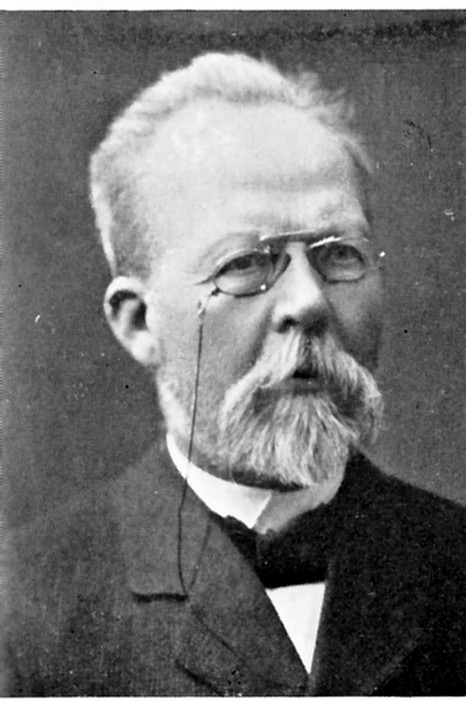
J.K. Qvigstad

Dozens of Sámi storytellers contributed to the volumes. Most of their tales were told in Sámi dialects to Qvigstad, from the 1880s through the 1920s; he then transcribed them into a standardized North Sámi and translated them to Norwegian. The stories came from different regions of Sápmi, particularly the Lyngen Peninsula, the Varanger Fjord, and Karasjok and Kautokeino. But the work of another collector, Isak Saba, was also important to the first volume of Lappish Folktales and Legends.

Saba, born on the Varanger Fjord and a former student of Qvigstad’s in Tromsø, played an important part in Sámi politics in the early twentieth century, as the first Sámi person ever elected to the Norwegian parliament. He later resumed teaching back in North-Varanger, but also decided to become a folklorist. With support from the Norwegian Folklore Archives in Oslo, Saba collected folktales from the Varanger Fjord area and from lands to the southeast, still inhabited by the Skolt Sámi in Neiden and Boris Gleb. Sadly, Saba died in 1921, just forty-five. Over a hundred folktales collected by Saba made their way into Qvigstad’s hands and into Lappish Folktales and Legends.


Isak Saba
Over the course of working on the translation of the folktales and writing a draft of the introduction, I became more aware of the extent of Isak Saba’s contributions, and I also grew determined to make them more visible. So my trip this summer was in part to educate myself more thoroughly about Isak Saba’s work as a folklorist, as well to get a sense of the landscape of these stories. I have long been curious to visit a few of the museums in East Finnmark, and particularly Ä´vv Saa´mi Mu´zei, the Skolt Sámi Museum located in the border area of Norway, in Neiden. The Skolt Sámi are far less written about than other groups of Sámi, and there’s not much about their history in English. But having translated a number of Skolt tales transcribed by Isak Saba, I was eager to see something of the Skolt landscape, however truncated by state borders and time.